
AI Robots Learn from Human Video
Dyna-2 teaches robots from human video, MiniMax H3 enables local AI inference on Macs, and YouTube expands creator monetization in 2027.

This week in AI, the spotlight is on robot learning, local AI inference, and the evolving creator economy. From Dyna Robotics using massive volumes of human video to teach robots physical skills, to MiniMax H3 bringing advanced AI inference closer to consumer hardware, and YouTube reshaping creator monetization for 2027, the industry is moving toward AI that can learn from real-world data, run more locally, and create new economic opportunities.
Dyna-2 is training robots on 1 million+ hours of human video, exploring how large-scale human activity data can help robots understand and perform physical tasks. The research points toward a future where robots can learn more efficiently without relying solely on robot-specific training data.
MiniMax H3 is coming to Mac through an open-source inference engine, giving developers a way to experiment with the model locally rather than depending entirely on cloud infrastructure. The project reflects growing interest in running capable AI models directly on consumer hardware.
YouTube is changing its Partner Program for 2027, introducing new monetization opportunities across Premium Lite, Shorts, shopping, and brand partnerships. The updates signal a broader push to give creators more ways to earn beyond traditional advertising.
Together, these developments highlight a broader shift in AI: models are moving closer to the physical world, becoming easier to run locally, and creating new opportunities for the people building and distributing digital content.
Dyna-2 Trains Robots on 1 Million+ Hours of Human Video
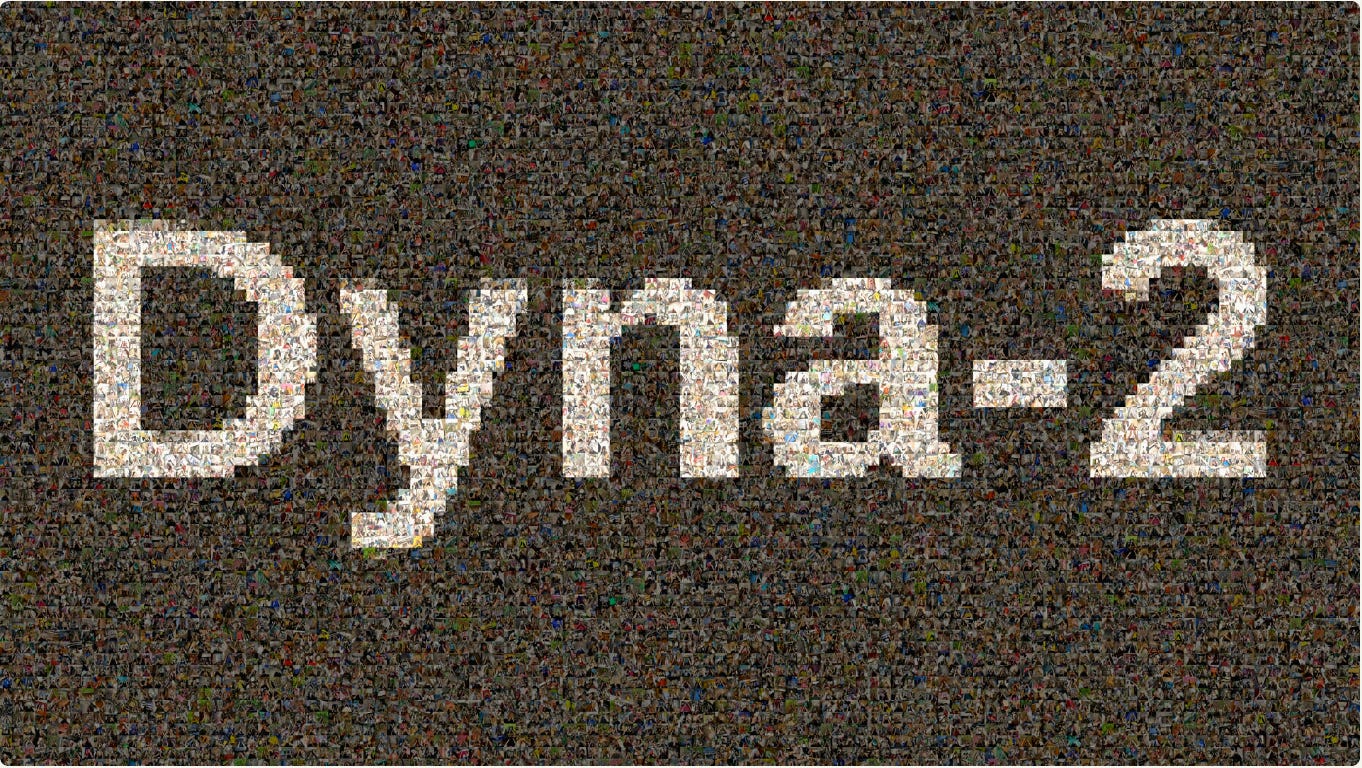
Dyna Robotics has introduced Dyna-2, a world-action-reasoning model pretrained on more than 1 million hours of egocentric human video. The research explores whether increasing the amount of human video data can improve a model’s ability to understand actions and transfer that knowledge across different physical embodiments, including robots. Dyna says its experiments demonstrate scaling behavior on both human and robot evaluations, suggesting that large-scale human video could become an important source of training data for robots. The work points toward a future where robots can learn physical skills from the vast amount of video humans already generate, potentially reducing the need for collecting massive amounts of robot-specific training data.
MiniMax H3 Gets a Lightweight Mac Inference Engine

A new open-source project on GitHub, h3.c, brings a MiniMax H3 inference engine to Mac computers. The project focuses on making the model easier to run locally, giving developers a way to experiment with H3 without relying entirely on cloud-based inference. The repository is written in C and released under the MIT license, making it accessible for developers who want to inspect, modify, or integrate the implementation into their own projects. The project has also quickly attracted attention from the open-source community, showing growing interest in running advanced generative AI models directly on consumer hardware.
YouTube Changes Its Partner Program for 2027
YouTube is making its first major changes to the YouTube Partner Program since 2018, with a stronger focus on rewarding active creators and expanding ways to earn. The platform says the program now includes more than 3 million creators, and upcoming changes will introduce new monetization opportunities while adjusting some existing requirements. YouTube is also expanding opportunities around Premium Lite revenue, Shorts, shopping, and brand partnerships. The broader direction is clear: YouTube wants creators to earn not only through traditional advertising but through multiple forms of audience engagement and commerce. These changes could significantly affect how creators plan their content, audience growth, and monetization strategies heading into 2027.
Hand Picked Video
In this video, I give you a full walkthrough of ExplainX.ai - a platform we originally built as an internal tool to keep our own content up to date, and have now evolved into a complete AI resource hub for our students and the community.
Most People Are Using AI Wrong
They’re re-prompting from scratch every time. Learn how Agent Skills fix that live, hands-on, no coding needed.
Top AI Products from this week
Media Sharing - GitHub has no API for attaching images to pull requests, so agents and CI ship blind. Argos Media Sharing fixes it: one command turns a screenshot or recording into a stable share link with ready-to-paste Markdown, and posts it on the PR automatically.
Unsloth Desktop - Unsloth Desktop is an open-source app to run and train AI models locally. Run LLMs, image/video diffusion, and audio. Connect agents like Claude Code or Codex to your local GPU with one command, and fine-tune models with no-code workflows.
Cohesor - Cohesor is the neutral control plane for AI agents. It sits between your agents - Claude Code, Codex, Cursor, agentic workflow and every LLM model: compressing ~50% of tokens, routing each request to the right-sized model, and governing spend per user for your team. One endpoint, zero code changes, 60–90% lower agent bills.
BearDrive - Your AI agents create real files on your laptop: research, plans, decks, data. BearDrive syncs them to your team with versions, authorship, and links, so teammates and their agents can reuse them. No new workspace to adopt. Your filesystem is the shared surface.
LaraCopilot - LaraCopilot is an agentic AI engineer that builds real, production-ready apps. Describe your idea in your own language and it builds the whole thing: UI, backend, database, auth, and APIs, wired together and ready to deploy.
Click - Click is an MCP that provides extensive research connectors to give external context that the built-in web search misses. It provides live context from professional & social platforms, marketplaces, financials, and more. A simple 1-min installation of the MCP in ChatGPT or Claude enables you to do more inside chat.
This week in AI
Adversarial Patterns Can Fool Surveillance AI - Researchers demonstrated a computer-generated visual pattern that can disrupt AI surveillance systems, preventing cameras from reliably detecting people, faces, and vehicles without blocking the footage itself.
Soniox Pushes Multilingual Voice AI - Soniox is advancing real-time speech AI with support for 60+ languages, enabling fast transcription, translation, and voice processing across multilingual conversations, accents, and noisy environments.
Higgsfield Launches AI Layers - Higgsfield has introduced Layers, an AI image editor that automatically decomposes images into editable layers while supporting accurate text rendering and native 4K output.
New Research Improves AI Code Review - A new OpenCodeReview approach makes AI code-review agents more deterministic by improving file selection, grounded review, parallel analysis, and reflection achieving stronger results while using significantly fewer tokens.
Paper Of the day
A new study titled “Why Does CLAUDE.md Keep Growing? Catastrophic Remembering in Agentic Coding” examines how instruction files used by AI coding agents can grow continuously over time. An analysis of 1,867 repositories and 247,694 instruction lifetimes found that these files grew by 226% on average, with older instructions becoming increasingly difficult to remove because developers lose the original reasoning behind them. The researchers call this phenomenon “catastrophic remembering.” Their experiments also found that adding informative comments explaining why an instruction exists can reduce unnecessary instructions by 99.3% while improving agent instruction-following by up to 23.1%. The findings suggest that as AI coding agents become more common, maintaining the context and rationale behind instructions could be just as important as writing the instructions themselves.
Read this whole paper 👉 here