
Get Ready for the ChatGPT-5.6
AI is accelerating fast as GPT-5.6 leaks reveal stronger reasoning, ElevenLabs launches full AI music creation, and Simi turns prompts into instant explainer videos.

This week in AI, the industry is rapidly evolving beyond simple automation tools into systems capable of advancing next-generation reasoning, generating full creative productions, and transforming how educational content is created. The focus is shifting toward AI that can think more deeply, create richer multimodal experiences, and deliver more interactive real-world workflows.
OpenAI’s rumored GPT-5.6 is generating major attention after multiple leaks and internal testing references surfaced online, suggesting significant advances in multi-step reasoning, autonomous agents, coding intelligence, and frontend generation capabilities that could reshape the competitive AI model landscape.
ElevenLabs expanded into AI music generation with its new text-to-music platform, enabling users to create full songs, vocals, instrumentals, and studio-quality compositions from simple prompts while offering advanced editing controls and multilingual creative flexibility.
A new AI video platform called Simi is pushing conversational learning forward by instantly generating whiteboard-style explainer videos from chat prompts, allowing users to receive personalized educational video lessons directly within collaborative workflows like Slack.
Together, these developments highlight how AI is becoming a far more capable digital collaborator one that can power advanced reasoning, produce professional-grade creative content, and deliver personalized learning experiences through increasingly autonomous and interactive systems.
GPT-5.6 Leaks Just Changed the AI Race
OpenAI’s rumored GPT-5.6 is already generating major buzz after multiple leaks and internal testing references surfaced online. According to reports, OpenAI researchers may already be using the model internally for advanced debugging, technical workflows, and complex reasoning tasks. Development tags like “iris-alpha,” “ember-alpha,” and “beacon-alpha” were also spotted, hinting that several experimental variants could currently be in testing. Early leaks suggest GPT-5.6 will focus heavily on stronger multi-step reasoning, improved AI agents, better coding assistance, and more advanced frontend generation capabilities. The rollout pattern reportedly looks similar to previous OpenAI launches, with quiet canary testing references appearing in developer environments before public releases. Current rumors point toward two versions arriving GPT-5.6 and GPT-5.6 Pro potentially launching alongside other major AI models like Claude Sonnet 4.8 and Gemini 3.5 Pro. If the leaks are accurate, June could become one of the biggest months for AI model releases this year.
ElevenLabs Is Now Making Full Songs With AI
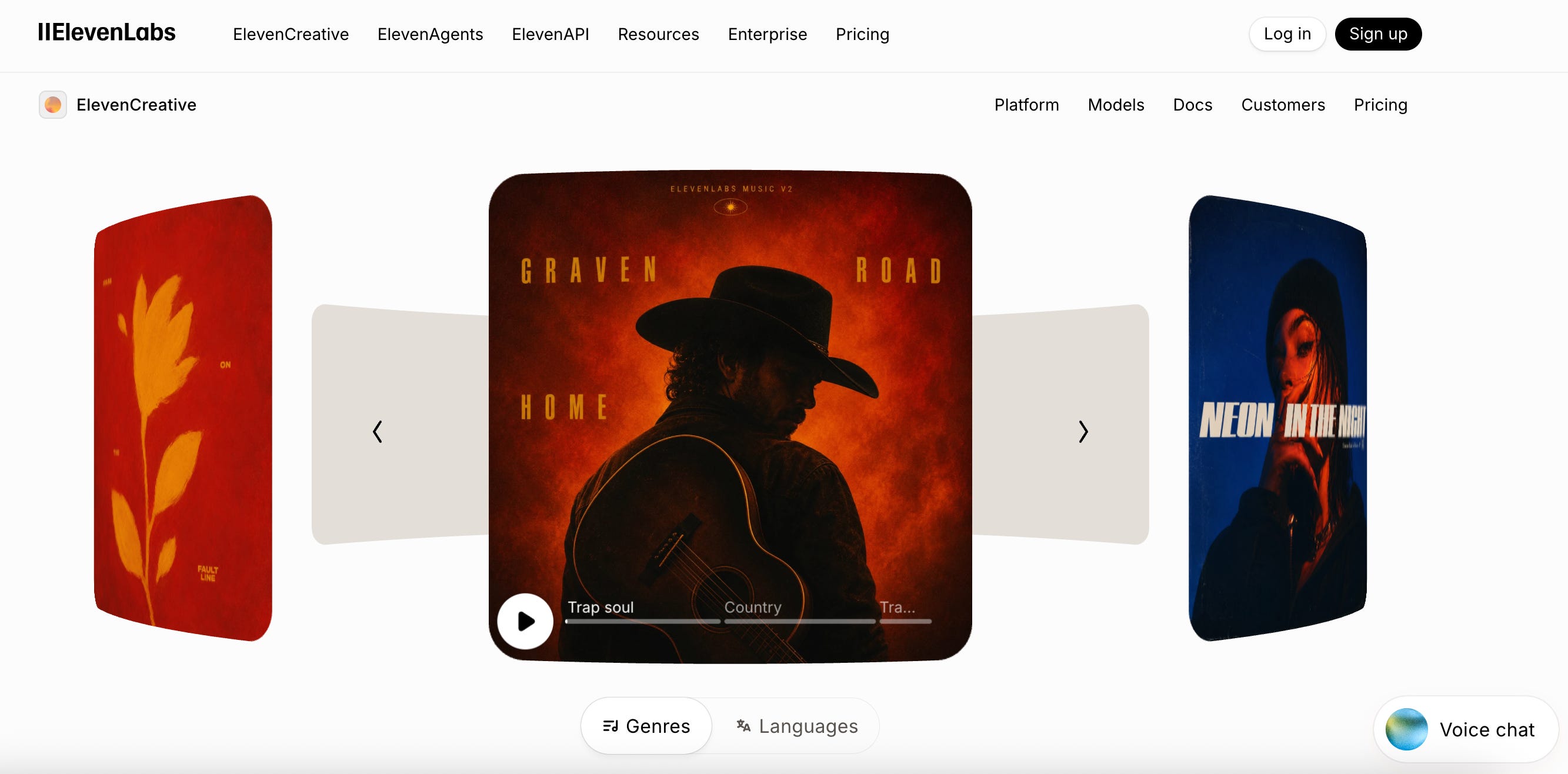
ElevenLabs Music is expanding beyond voice AI and entering the AI music space with a powerful text-to-music platform that can generate full songs, vocals, instrumentals, and structured compositions from simple prompts. Users can create tracks in different genres, customize lyrics, edit sections like intros or choruses, and export studio-quality audio for commercial use. The platform also supports multilingual music generation and fine-tuning models using custom audio styles. Recently, ElevenLabs introduced Music v2 with better vocals, richer arrangements, improved multilingual support, and advanced editing controls, positioning itself as a strong competitor to AI music tools like Suno and Udio. The platform is designed for creators, marketers, filmmakers, and content teams who need copyright-safe music without hiring full production studios. Users can quickly generate background scores, cinematic music, ad jingles, podcast intros, and social media tracks in minutes. With AI music tools rapidly evolving, ElevenLabs is positioning itself as an all-in-one creative audio ecosystem combining voice, dubbing, sound effects, and now music generation into a single platform.
Introducing ChatGPT for Explainer Videos
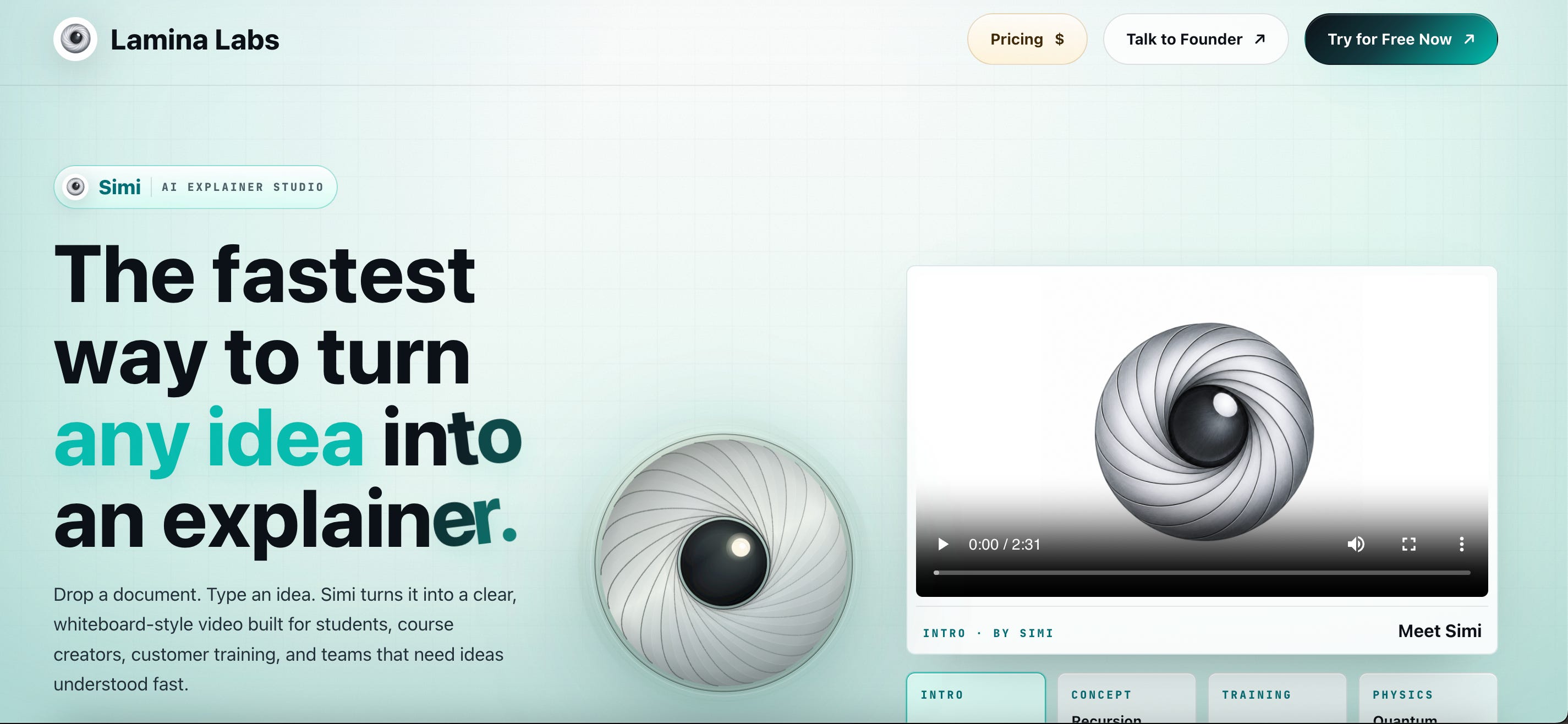
AI video generation is becoming more interactive with Simi, a new tool that can create whiteboard-style explainer videos from a single prompt in seconds. In a recent demo, the platform was connected to the Hermes AI agent through Slack, allowing users to simply ask questions in chat and instantly receive fully generated educational videos. The showcased example explained mechanistic interpretability in a complete 2-minute animated lesson generated automatically by AI. What makes the project stand out is its focus on conversational learning. Instead of watching static tutorials, users can ask follow-up questions and receive entirely new explanations instantly, creating a more personalized educational experience. Early users praised the speed and automation, while feedback highlighted areas like AI voice quality, aspect ratio optimization, and better editing controls. The concept points toward a future where AI-generated video lessons become a real-time interface for learning directly inside workplace tools like Slack.
Hand Picked Video
In this video, we’ll look at real-world GPT-5 use cases from coding and writing to reasoning and research to see if it truly lives up to the hype and how it stacks up in everyday tasks.
Top AI Products from this week
Powabase - Powabase is a backend-as-a-service for AI-native applications, combining Postgres, RAG, agents, memory, workflows, and automation primitives in one platform. It helps agencies and in-house IT teams build new AI apps or add AI automation to existing products without stitching together fragmented infrastructure.
Calling Skills for AI Agents - HD voice and video calling by CometChat, built to fit into and grow with your platform. Packed with recording, screen sharing, call logs, raise hand, broadcast mode, picture-in-picture, and more.
BaseBuddy - BaseBuddy is an open-source Supabase CMS and self-hosted editor for existing Supabase and Postgres databases.
Chunk sidecars - AI agents write code fast. Validation still happens after the push by then the context is gone. Chunk sidecars run scoped microbuilds before commit, in a real CI mirror. Auto-detects your stack. ~27s average vs ~5 min billable compute for a full run.
zero.xyz - Zero unblocks your agents so they can discover services to accomplish tasks, no APIs keys or config. Works with Claude Code, Codex, Gemini, OpenClaw, Hermes and most other CLI agents. Make your agents better with Zero.
Krater - Krater turns AI from something you try into something you use. Every AI model, every modality, every app you use, combined into one chat and driven by one agent. Tell it what you need in plain language and it gets it done; whatever you’re building, studying, running or creating.
This week in AI
AIventure by Google - Google Gemma launched AIventure, an open-source retro dungeon crawler that teaches agentic AI workflows, vibe-coding, and real-time AI app generation inside gameplay.
SynthID Expands - Google DeepMind is partnering with OpenAI, ElevenLabs, and Kakao to expand SynthID AI watermarking after already marking 100B+ AI-generated content pieces.
Grok Build CLI - xAI launched Grok Build CLI, a developer tool that lets users build, edit, and run apps directly from the terminal using Grok-powered AI coding workflows.
Huawei’s Chip Breakthrough - Huawei unveiled a new “Tau Scaling” chip strategy to bypass US sanctions, aiming for 1.4nm-level chip performance by 2031 without advanced Western tools.
ChatGPT Personalities - OpenAI now lets users customize ChatGPT personalities with styles like Friendly, Professional, Quirky, and Efficient to make AI conversations feel more personalized.
Paper Of the day
Researchers introduced MUSE-Autoskill, a new AI agent framework that allows language models to continuously create, reuse, refine, and improve skills over time instead of treating them as static abilities. The system gives AI agents a full skill lifecycle including memory, management, evaluation, and refinement enabling them to learn from previous tasks and become more efficient with repeated use. A key innovation is “skill-level memory,” where each skill stores experiences and feedback from earlier tasks, helping the AI adapt and improve performance across different environments. The framework also uses automated testing and runtime feedback to refine skills continuously, making agents more reliable and reusable. Early experiments showed improvements in task success, efficiency, cross-agent collaboration, and long-term reasoning capabilities, highlighting a major step toward self-evolving AI systems.
Read this whole paper 👉 here