
Google DeepMind Predicts AGI by 2030
Demis Hassabis predicts AGI within 3–4 years, Anthropic upgrades Claude Opus 4.8, and Hugging Face cuts AI update costs with Delta Weight Sync.

This week in AI, the industry is rapidly accelerating beyond simple automation tools into systems capable of advancing human-level reasoning, powering autonomous workflows, and scaling next-generation AI infrastructure. The focus is shifting toward AI that can think more deeply, operate with greater independence, and make large-scale AI development faster and more efficient.
Google DeepMind CEO Demis Hassabis says AGI could arrive within the next 3–4 years, warning that society may be unprepared for the massive impact advanced AI systems could bring across healthcare, education, robotics, and scientific research.
Anthropic launched Claude Opus 4.8 with major improvements in coding, reasoning, and autonomous agent workflows, making the AI model more capable for complex software engineering and enterprise-level tasks.
Hugging Face introduced Delta Weight Sync, a new system that updates AI models by transferring only the changes between versions instead of full model weights, dramatically reducing bandwidth, deployment time, and infrastructure costs.
Together, these developments highlight how AI is evolving into a far more powerful digital infrastructure layer one capable of enabling advanced reasoning, autonomous problem-solving, and scalable AI innovation across both enterprise and open-source ecosystems.
Demis Hassabis Says AGI Could Arrive Within 3–4 Years
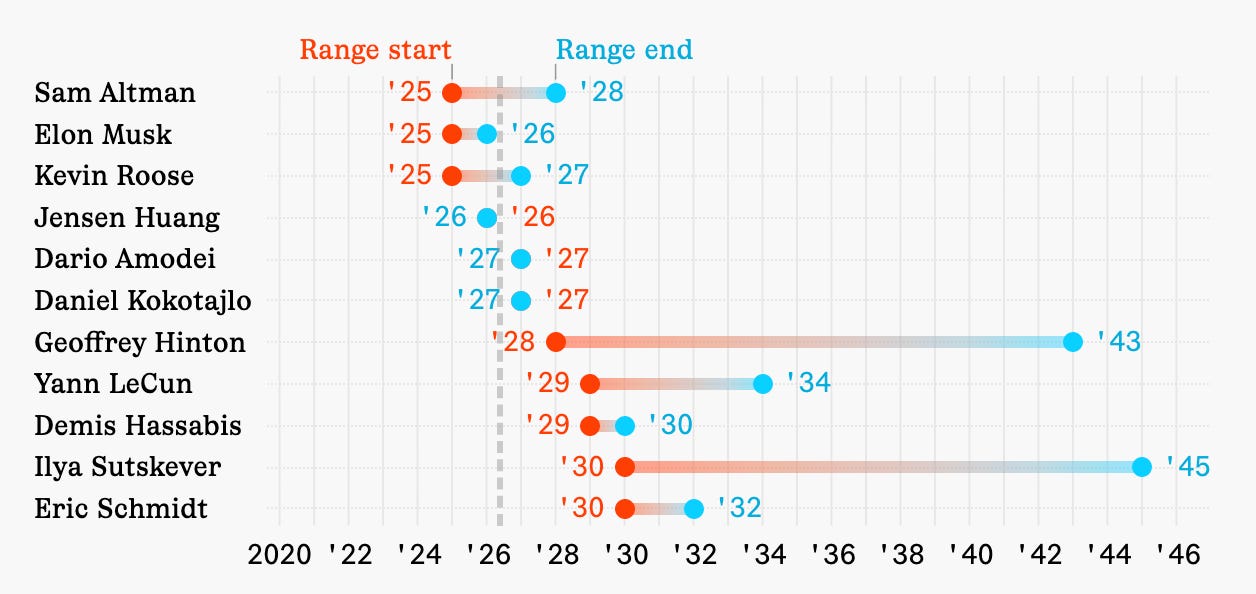
Google DeepMind CEO Demis Hassabis believes Artificial General Intelligence (AGI) could become reality by 2029 or 2030, significantly accelerating his earlier predictions. Speaking around the recent Google I/O discussions, Hassabis described today’s AI agents as a “practice run” for much more powerful systems, saying humanity is currently standing in the “foothills of the singularity.” He pointed to rapid improvements in reasoning, autonomous agents, multimodal AI, and scientific discovery systems as signs that the industry may be approaching human-level intelligence faster than expected. Hassabis also highlighted how AI could transform healthcare, education, robotics, and research by solving problems currently beyond human capability. However, he warned that governments, industries, and society remain largely unprepared for the economic disruption, regulation challenges, and ethical risks AGI could introduce over the next decade.
Anthropic Launches Claude Opus 4.8 With Stronger Coding and Reasoning
Anthropic has unveiled Claude Opus 4.8, the latest upgrade to its flagship AI model focused on advanced coding, reasoning, and long-context performance. The new version delivers major improvements in software engineering tasks, complex problem-solving, and agent-style workflows while maintaining stronger reliability and safety. Anthropic says Claude Opus 4.8 performs better on difficult benchmarks involving multi-step reasoning, autonomous coding, and research assistance, making it more capable for enterprise and developer use cases. The update also reflects the growing competition among leading AI labs racing to build more powerful AI systems that can operate with greater autonomy and intelligence.
Hugging Face Introduces Delta Weight Sync for Faster AI Updates
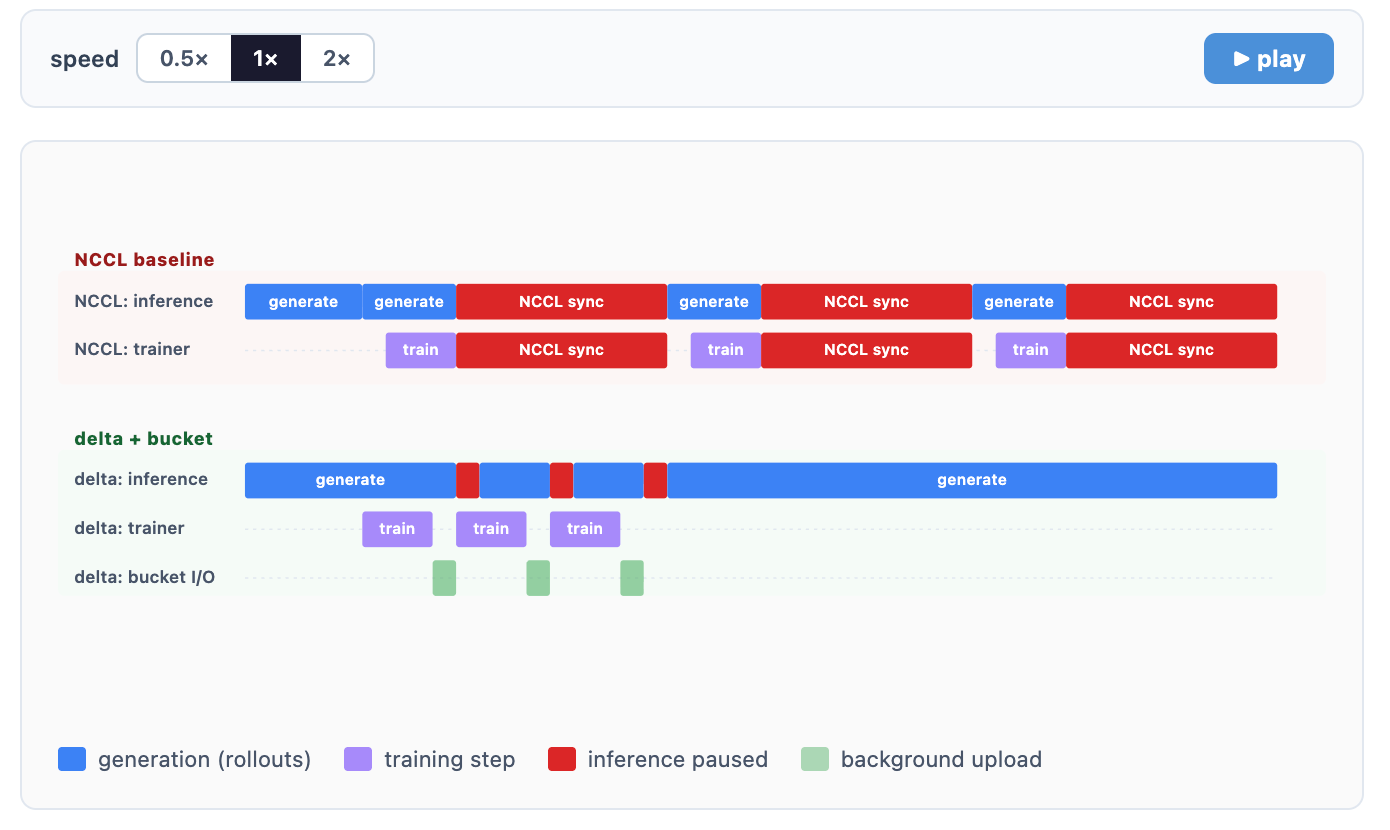
Hugging Face has introduced Delta Weight Sync, a new technique designed to dramatically reduce the cost and bandwidth needed to update large AI models. Instead of downloading entire model weights every time a model changes, the system only transfers the “delta” the small differences between model versions. This makes syncing and distributing massive models significantly faster and more efficient, especially for developers working with billion-parameter LLMs. The approach could improve collaborative AI development, speed up deployments, and reduce infrastructure costs for open-source AI ecosystems as models continue growing in size and complexity.
Hand Picked Video
In this video, we’ll explore Large Action Models (LAMs), the revolutionary AI systems that transform how machines interact with our digital world. Unlike traditional language models that just generate text, LAMs can actually execute tasks - from booking reservations to automating complex workflows. We’ll break down the groundbreaking technology behind systems like the Rabbit R1, which can understand and replicate human actions across apps and interfaces.
Top AI Products from this week
Integuru - Integuru generates fast, reliable APIs for any platform, without browsers or RPA. API calls complete in ~3 seconds with 99.9%+ success. Most agents today use browser automation to control web apps that lack official APIs, but this is slow and brittle.
Ava 2.0 - Ava is an AI BDR that runs your entire outbound on autopilot. She sources leads from 250M+ professionals, runs multi-channel outreach, and books qualified meetings. Fully autonomously.
MoDev - The AI dev environment built for your phone. Connect GitHub, Vercel, Supabase, Gmail, Calendar, and more. Any AI. Any API. Then chat to ship. → Deploy from your phone → Read repos, commit, open PRs → Query your database with natural language → Manage email and calendar by chat → BYOK on dev plans ·
KeptWell - KeptWell is an AI medical document hub for families navigating a serious illness or an aging parent’s care. Upload the scans, lab reports, discharge summaries, even audio of appointments.
MCP Bridge by Appfactor -Point MCP Bridge at any REST, GraphQL, SOAP, or gRPC API. It auto-generates MCP tool definitions with typed schemas, auth, rate limiting, and response processing. Your LLM agents call enterprise APIs through one standard interface.
GPS - Your coding agent forgets everything the second a session ends. GPS fixes that. It learns your repo’s rules, decisions, gotchas, and test commands, then surfaces exactly what’s relevant before any edit. No more “don’t log PII here” corrections twice.
This week in AI
YouTube Updates AI Labels - YouTube is improving AI-generated content labels to give viewers more context while helping creators avoid unnecessary warnings on harmless AI-assisted videos.
Apex for React Native - Callstack introduced Apex, a specialized AI model built for React Native development. It delivers faster, framework-aware coding with lower costs than general AI models.
Grok Build CLI - xAI launched Grok Build CLI, a developer tool that lets users build, edit, and run apps directly from the terminal using Grok-powered AI coding workflows.
Claude Voice Goes Multilingual - Anthropic is expanding Claude Voice Mode with support for more languages, push-to-talk controls, and a smoother mobile experience to compete with ChatGPT and Gemini.
AI Studio Adds 3D AI Video Control - Reallusion launched AI Studio, combining 3D animation tools with ByteDance’s Seedance AI to give filmmakers precise camera, motion, and scene control in AI-generated videos.
Paper Of the day
Researchers introduced “Equilibrium Reasoners,” a new AI approach that treats reasoning like a dynamic system converging toward correct answers over time. Instead of relying on fixed-depth models, the system keeps refining its internal reasoning process through iterative computation, allowing it to solve increasingly difficult problems. The model achieved over 99% accuracy on extreme Sudoku benchmarks by scaling reasoning steps up to the equivalent of 40,000 neural network layers, showing how future AI systems could become far better at complex reasoning tasks.
Read this whole paper 👉 here