

This week in AI, the spotlight is on accessible data analysis, more natural human-robot interaction, and a new era of AI-powered app development. From Microsoft making data visualization easier with natural language, to Matic enabling voice and gesture-controlled robot vacuums, and Shipper turning vibe coding into a visual, swipe-based experience, AI is becoming easier to use across data, physical devices, and software creation.
Microsoft is making AI-powered data analysis more accessible with Data Formulator, an open-source tool that lets users transform data and create visualizations using natural language instead of complex code.
Matic is making robot vacuums more intuitive with voice commands, gestures, and visual understanding, allowing users to communicate tasks naturally and direct robots toward specific objects or areas.
Shipper is reimagining AI app development with a swipe-based “Tinder for vibe coding” experience, helping users quickly turn ideas, websites, and existing products into mobile-app concepts and refine them visually.
Together, these developments highlight a broader shift in AI: powerful capabilities are becoming more accessible, intuitive, and interactive, allowing people to analyze data, control physical devices, and build software with less technical friction.
Microsoft Makes AI Data Analysis More Accessible

Microsoft has open-sourced Data Formulator, an AI-powered tool designed to make data analysis and visualization easier without requiring users to manually write complex code. Users can connect data sources such as CSV files, describe the analysis or visualization they want in natural language, and let the system help transform raw data into meaningful charts and insights. The tool combines AI with an interactive interface, allowing users to refine visualizations and explore their datasets more naturally. By open-sourcing Data Formulator, Microsoft is making its approach to AI-assisted data analysis available to developers and researchers, potentially enabling new applications around automated analytics, visualization, and data exploration.
Matic Turns Robot Vacuums Into Voice-Controlled Helpers
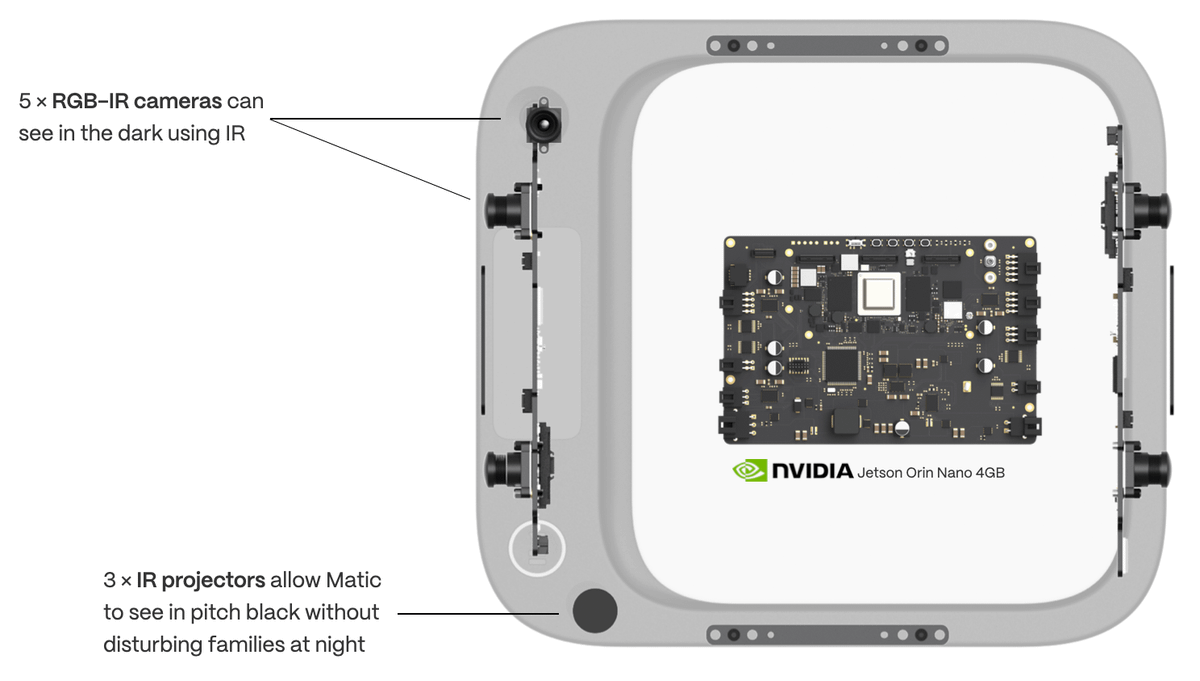
Matic is making robot vacuums easier to control with a new interaction system that combines voice commands, gestures, and visual understanding. Instead of navigating menus or manually directing the robot, users can simply tell it what to do and point toward the area they want cleaned. The robot can interpret the command, understand the referenced object or location, and navigate toward it. This moves robot control beyond predefined commands toward a more natural human-computer interaction model, where users can communicate with a physical device almost like they would with another person. The approach also highlights how multimodal AI can make household robots more useful by combining language understanding with spatial awareness and real-world perception.
Shipper Turns Vibe Coding Into a Swipe-Based Experience

Shipper is experimenting with a new way to make AI-powered app development more visual and accessible through what it describes as “Tinder for vibe coding.” The idea is to let users explore and iterate on AI-generated app concepts instead of starting with a traditional development environment. Users can provide a website or an existing product as a starting point, while AI helps translate the concept into a mobile-app experience. The approach focuses on rapid experimentation: rather than spending hours writing code before seeing a result, users can quickly generate an interface, evaluate it, and continue refining the direction. It reflects a broader shift in AI development tools, where the goal is increasingly to let people describe what they want and let AI handle much of the underlying design and implementation work.
Hand Picked Video
In this video, we’ll look at what MCP servers are, how they connect Claude with external apps, and how to use connectors like Descript to edit videos with AI. We’ll also explore 1,700+ unofficial MCP servers and how to find them.
Top AI Products from this week
HarnessRouter Community Edition - Plug-and-play managed agent harnesses in your product: Codex, Claude Code and Hermes through one API on your infrastructure, now open sourced under Apache 2.0. Switch harnesses without rebuilding your backend.
CostLogic - CostLogic is a construction takeoff and job-costing workspace with a powerful agent called Onyx. Onyx can perform actions on your behalf. Upload plans, detect rooms, calibrate scale, measure quantities, turn takeoffs into estimates, and send invoices, all in one browser-based workflow.
Interview Agent by NexI - Transform your hiring process with Interview Agent by NexI. AI-powered automated interviews, intelligent candidate evaluation, and seamless recruitment workflow. Powered by TalentArbor technology.
WebBrain - Your browser, your models, your data. WebBrain is a free, open-source AI browser agent for Chromium browsers and Firefox. Run it locally with llama.cpp and most queries cost nothing your data never leaves your device.
Scaloom - Scaloom is an AI-powered Reddit marketing platform that helps founders build trusted accounts and turn Reddit into a search acquisition channel.
Assetli.app - Most finance apps just show you a dashboard. Assetli lets your AI use it. Connect directly to Claude or ChatGPT via MCP your assistant reads your real net worth, transactions and portfolio, and can update them too, right inside your own AI chat (we never see it).
This week in AI
Gemini 3.7 Flash Powers Smarter Agents - Gemini 3.7 Flash improves reasoning, coding, planning, and tool use, helping developers build stronger AI agents in Google Antigravity.
AI Agents Learn From Experience - New research explores how AI agents can learn from past interactions, improve reasoning, and handle complex tasks across longer workflows.
New Research Pushes AI Reasoning - Recent AI research explores new approaches to reasoning and agentic systems, aiming to improve reliability and performance on complex tasks.
AI Agents Become More Reliable - New research tackles challenges in long-horizon planning, context handling, and tool use, pushing AI agents toward more autonomous and dependable workflows.
Paper Of the day
A new research paper proposes Sustainable Federated Learning as a Service (SFLaaS), a framework that uses Neural Architecture Search to make distributed AI training more sustainable. It considers each participant’s hardware, carbon budget, energy efficiency, and changing grid emissions when selecting model architectures and scheduling workloads. The system jointly optimizes model performance, carbon feasibility, and participation coverage, helping prevent participants from dropping out when their training becomes too expensive environmentally. Experiments on real-world datasets and simulated environments show that the approach can maintain effective federated learning while operating under strict carbon constraints.
Read this whole paper 👉 here