
OpenAI's Biggest Math Breakthrough Yet
OpenAI achieved major math breakthroughs, Alibaba launched the 2.4T-parameter Qwen 3.8-Max, and Ramp introduced a private benchmark to better evaluate real-world AI coding agents.

This week in AI, the spotlight is on frontier reasoning, open-weight foundation models, and real-world AI evaluation. From OpenAI showcasing AI-driven mathematical breakthroughs, to Alibaba launching its largest open-weight model with Qwen 3.8-Max, and Ramp introducing a private benchmark for testing AI coding agents, the industry is pushing the boundaries of intelligence, scale, and reliable performance.
OpenAI unveiled 10 major advances in mathematics and theoretical computer science, demonstrating how its latest reasoning models can solve long-standing problems, generate original proofs, and contribute meaningful insights to scientific research. The work highlights AI’s growing role as a research collaborator capable of accelerating discovery across mathematics, computer science, physics, and cryptography.
Alibaba introduced Qwen 3.8-Max, its most powerful AI model to date, featuring 2.4 trillion parameters and an open-weight release. Designed for advanced reasoning, coding, multimodal understanding, and enterprise AI agents, the model intensifies global competition among frontier AI labs while giving developers greater flexibility to build next-generation AI applications.
Ramp launched Ramp SWE-Bench, a private benchmark built from real software engineering challenges to better evaluate AI coding agents. By testing models on unpublished, production-grade tasks instead of widely used public benchmarks, Ramp aims to provide a more accurate assessment of AI performance in debugging, code generation, and real-world development workflows.
Together, these developments show how AI is advancing beyond bigger models toward deeper reasoning, more open innovation, and more rigorous evaluation, laying the foundation for systems that are not only more capable but also more trustworthy in research and software engineering.
OpenAI Reveals 10 AI Breakthroughs in Mathematics

OpenAI has unveiled 10 major advances in mathematics and theoretical computer science, showcasing how its latest reasoning models are tackling problems that have challenged researchers for decades. The breakthroughs include solving long-standing open problems, generating original mathematical proofs, improving algorithm design, and making meaningful contributions to theoretical computer science. Rather than simply assisting with calculations, these AI systems are demonstrating the ability to produce novel insights that experts can verify, highlighting a significant step toward AI becoming a genuine research collaborator. The research also shows that advanced reasoning models can work alongside mathematicians to explore new ideas, validate complex proofs, and accelerate discovery. While AI is not replacing human researchers, it is becoming a powerful tool for expanding the pace and scale of mathematical innovation, with potential applications across science, engineering, cryptography, and physics.
Alibaba Unveils Its Most Powerful AI Yet
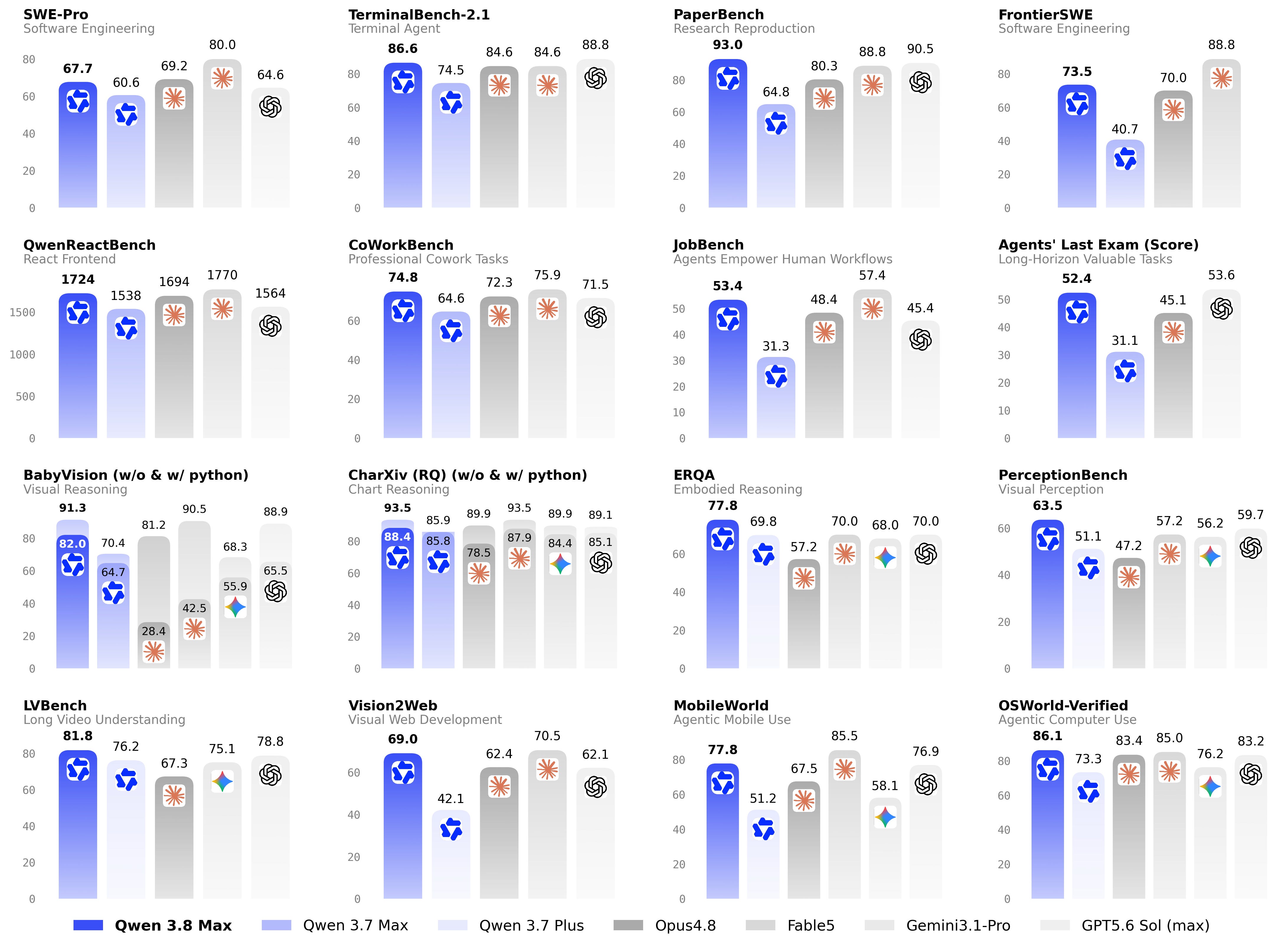
Alibaba has officially launched Qwen 3.8-Max, its most powerful AI model yet, featuring a massive 2.4 trillion parameters and returning to an open-weight release strategy. The company claims the model delivers performance on par with leading frontier models from OpenAI and Anthropic across reasoning, coding, and multimodal tasks, while giving developers greater flexibility to build and customize AI applications. Qwen 3.8-Max is designed to support advanced AI agents, complex coding workflows, and enterprise-scale deployments, making it one of the largest publicly available AI models ever announced. Its release also strengthens China’s position in the global AI race, highlighting the growing momentum behind open-weight foundation models and increasing competition with leading U.S. AI labs.
Ramp Introduces Private SWE-Bench for AI Coding
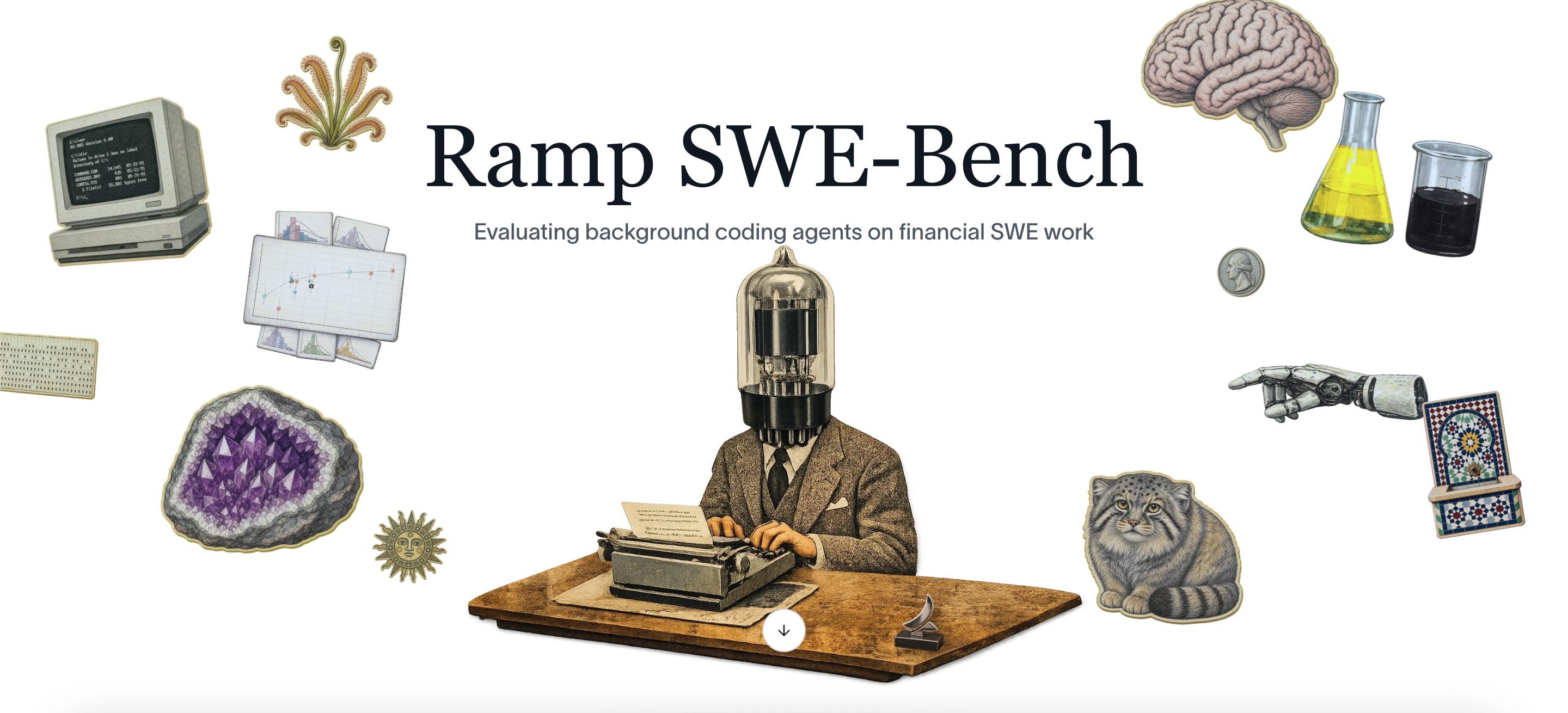
Ramp has introduced Ramp SWE-Bench, a new private benchmark built from real engineering challenges faced by its own developers to evaluate AI coding agents in production-like environments. Unlike public benchmarks that models may have already seen during training, Ramp SWE-Bench focuses on fresh, unpublished software engineering tasks, providing a more realistic measure of how AI performs on real-world coding problems. The company says public coding benchmarks are becoming saturated, making it harder to distinguish the true capabilities of frontier AI models. By using private, production-grounded tasks, Ramp aims to better evaluate AI systems on debugging, code generation, and software engineering workflows that mirror the challenges developers face every day.
Hand Picked Video
In this video, we’ll look at how to use Claude AI Design to create stunning product demo videos using simple prompts, screenshots, and website details. We’ll explore how Claude Design works as a powerful design AI tool for building demo videos, product presentations, and visual storytelling without needing advanced editing skills.
Top AI Products from this week
AgentSky - Managed agent as a service: launch a long-horizon AI agent in one click Claude Code, Codex, Hermes, or OpenClaw — with full history, managed recovery, and access through WhatsApp, iMessage, Telegram, Slack, web, API developers, and CLI.
Ctruh Studio - Ctruh Studio is an AI-powered no-code platform that lets anyone create, customise and publish interactive 3D experiences for websites. Generate 3D assets with AI, build immersive product showcases, virtual stores, configurators and AR experiences directly in your browser.
AgentSky - Managed agent as a service: launch a long-horizon AI agent in one click Claude Code, Codex, Hermes, or OpenClaw with full history, managed recovery, and access through WhatsApp, iMessage, Telegram, Slack, web, API developers, and CLI.
Airtop for Google Ads Automation - Airtop builds, monitors, and optimizes your Google Ads campaigns from a conversation. Keyword research, campaign creation, waste audits, and performance reporting no expertise required.
Hand Wave - Hand Wave turns sign language into text and speech using the camera on Meta smart glasses. It also works cross-platform (iOS + web). Under the hood is a lightweight, open-source neural network trained on Google’s FSBoard dataset and built to run locally across devices (wip).
mpai - Open-source terminal multiplayer for Codex and Claude Code. Join a teammate’s explicitly shared native session from another Mac, arrive with the real context, and prompt with your name attached. Tailscale stays private; the host Mac stays in control.
This week in AI
DeepSeek Releases V4 Flash - DeepSeek has launched V4 Flash, a faster open-weight AI model optimized for reasoning, coding, and efficient inference, delivering high performance with lower latency.
OpenAI’s Vision for Abundant Intelligence - OpenAI outlined its vision for “Abundant Intelligence,” focusing on making advanced AI widely accessible, accelerating innovation, and creating broad economic value.
Motion Launches AI Workspace - Motion introduced new AI-powered workflow features that automate planning, prioritize tasks, and streamline project management to help teams work more efficiently.
AI Creates a Complete 3D Game - A developer showcased an AI workflow capable of generating a fully playable 3D game using prompts, highlighting rapid advances in AI-powered game development.
BytePlus Expands Seedance 2.5 - BytePlus showcased Seedance 2.5, bringing longer AI video generation, precise editing, multilingual support, and up to 50 reference inputs for more consistent videos..
Paper Of the day
Researchers have introduced a new system that enables LLM agents to detect and recover from failures in real time without relying on expensive secondary AI judges. Instead, the method monitors lightweight telemetry signals during execution to identify issues such as looping, tool errors, hallucinations, or drifting away from the original task. When a failure is detected, the system automatically rolls back and retries the task, increasing overall task success from 52% to 73% while adding only about one extra model call. Running in just ~200 microseconds per step, the approach offers a practical way to make AI agents more reliable and production-ready without significantly increasing inference costs.
Read this whole paper 👉 here